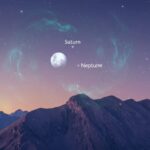
Ever seen a “smiley face” in the night sky? Tonight might be your chance. On January 23, 2026, the Moon, Saturn, and Neptune will appear close together after sunset, creating a rare and beautiful triple conjunction, a treat for anyone who loves stargazing.
As the Moon curves gently below Saturn and Neptune, the trio may look like a soft arc in the sky, almost like nature’s own emoji, a quiet little “smile” above Earth. What’s actually happening in the sky? This event is called a triple conjunction. That means three space objects appear close together from Earth, even though they are millions or billions of kilometres apart in reality. Tonight, you’ll see: Neptune is so distant and dim that you’ll need binoculars or a small telescope to spot it. Also read: Indian govt plans ‘Kill switch’ feature to fight digital arrest
Best time to watch Timing is important for this one. The best viewing window is about 30 to 90 minutes after sunset. After that, the trio will slowly dip below the western horizon and disappear from view. So don’t wait too long, this is an early-evening show, not a midnight one. How to spot the trio Start by finding the crescent Moon in the western sky soon after sunset. Next to it, you’ll notice bright Saturn, which doesn’t twinkle like stars. Neptune will be very close to Saturn, but you won’t see it with the naked eye. Use binoculars or a small telescope, and look just beside Saturn to find the faint blue dot. For best results: Where will this be visible? People in many parts of the world can see it, including: If you can see the Moon and Saturn after sunset, you’re in the right place. Also read: What everyday health issues do astronauts face in space?
Why do these alignments happen? All the planets, including Earth, move around the Sun in roughly the same flat path. Because of this, they sometimes line up from our point of view. The Moon moves quickly across the sky, so when it passes near planets like Saturn and Neptune, we get these short-lived but lovely alignments. How rare is this? Planet pairings are not unusual, but adding Neptune into the mix makes this event special. Neptune is extremely faint (around magnitude 7.9), which is why we don’t often notice it during conjunctions.
Seeing the Moon, Saturn, and Neptune all grouped is not an everyday sight, especially for casual sky watchers. That’s what makes tonight’s view worth stepping outside for. Also read: Grok rolls out new feature likely to create sensation
Final tip before you step out Head outside shortly after sunset, face west, and let your eyes adjust to the dark. Start with the Moon, find Saturn beside it, and then bring out your binoculars to hunt for Neptune.
The post appeared first on .