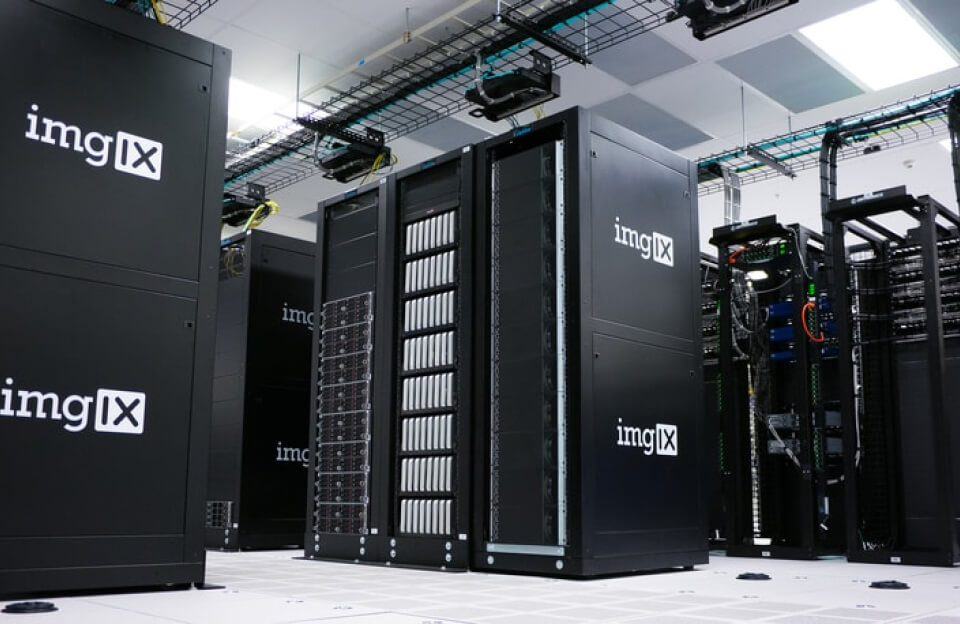
During a live event of the ‘ALL IN Summit’ in California, US, Nvidia CEO Jensen Huang got a surprise call from US President Donald Trump about growing fears over AI. The American president said, to Huang “The data centres are great and they make people wealthy and they make states wealthy and it’s the oil of the next 20, 25 years. It’s bigger than the Internet and the AI. You know, much more so. And they’re just playing right into the hands of a lot of people that don’t want to see it happen and that could be political people that could also be China. And we’re not going to let that happen. It’s a, it’s a hoax and You’re right. We’re not going to let that happen, sir. No, we’re not going to let it happen. The uh the robots are not going to be taking over the world, and that’s not going to happen.” Huang said at the event that people speaking of extinction-level events were exaggerating the scenario and that the need was to develop safely. He added, “Probably what’s perturbing to some people. They’re like, what does that mean, 10% of extinction? Nobody knows how to explain that to the average person, how that’s even possible. Well, first of all, we shouldn’t because it’s made up…The confluence of these words and then the prediction is alarming and troubling. And it shouldn’t be done. It’s irresponsible. There is a part about safety, which we have to take very seriously. Safety is paramount, obviously.” Before the call, Trump had made a statement condemning the critics of AI. In his statement, Trump claimed that influential individuals who condemn the supremacy of AI are creators of a hoax, and he is a hoax buster. His comments condemned the Democrats and compared ‘AI Hoax’ to yet another important issue of Global warming, which the President considered a misconception. In a post on Truth Social, Donald Trump had said, “The AI Hoax being perpetrated by the Radical Left Democrats is reminiscent of their Global Warming Scam of not so long ago, where everyone was going to die from extreme heat. What happened?”. But why is AI controversial? Several influential individuals across industries have been objecting to the dominance of AI and its increasing use. Recently, Jack Clark, one of the seven founders of Anthropic, one of the world’s largest AI firms, said, “A way of shutting off AI software completely if it gets too dangerous was something society might want to eventually pass rules around”. Similarly, the IMF has warned that AI could affect nearly 40% of jobs and worsen global financial inequality. Prof Geoffrey Hinton, an AI “godfather,” cautioned that powerful AI systems could even threaten human extinction — a view dismissed by fellow AI pioneer Yann LeCun. Critics point to more immediate risks According to a report by the BBC, AI systems trained on public data can reproduce societal biases like sexism and racism, and often present false information as fact or invent sources. In early 2025, Apple withdrew an AI feature after it misrepresented news notifications, while Google faced backlash over inaccurate AI search summaries. Concerns have also emerged over AI’s use in schools and workplaces — students using it to cheat and employees secretly using it at work. In October 2024, thousands of creators — including ABBA’s Björn Ulvaeus, authors Ian Rankin and Joanne Harris, and actress Julianne Moore — signed a statement calling AI a “major, unjust threat” to their livelihoods. How does AI affect the environment? Some researchers estimate that the AI industry can soon consume power equal to that of the Netherlands. The production of computer chips needed to run AI programmes requires lots of power and water. Additionally, the rapid rise in the need for generative AI services also leads to an increase in the number of data centres that keep the systems running. These data centres are often composed of acres of tech infrastructure which huge sums of power to run and large volumes of water to keep them cool. This could in the future worsen the already existing water problem across the globe. Are there laws to monitor AI? Several countries have introduced laws that monitor the operations of AI. These countries include- 1. The EU’s Artificial Intelligence Act controls high-risk systems used in areas such as education, healthcare, law enforcement, or elections. 2. Generative AI developers in China are required to safeguard citizens’ data and promote transparency and accuracy of information. 3. The UK has established an independent AI Security Institute and has amended laws to target specific AI dangers, such as banning tools that can create deepfake nude imagery or create child sexual abuse material.
The post appeared first on .